Why sexxus nexxus?
Young people hear the messages.
Practice safer sex.
Protect yourself.
Get tested.
Make responsible choices.
But knowing what to do and being able to do it are two very different things.
Sexual-health resources may exist in a clinic, a school health center, a health department, a store, or even a vending machine. But prevention only works when people can access the right resources privately, practically, and at the moment they need them.
That is the gap Sexxus Nexxus was created to address.

THE NUMBERS TELL PART OF THE STORY
50%
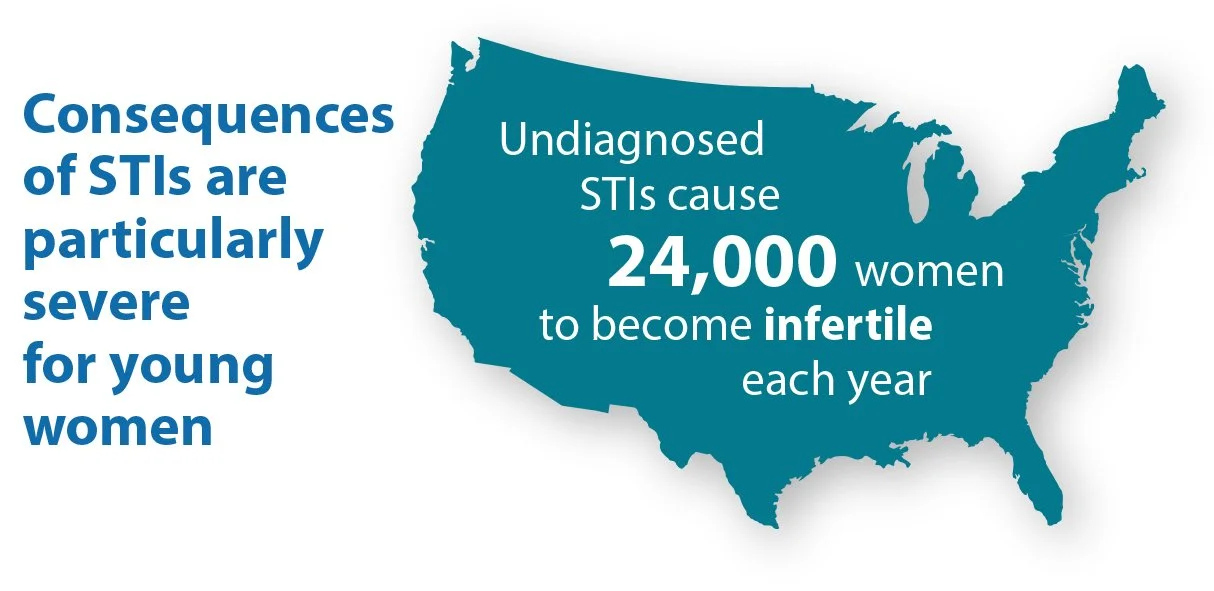
of reported chlamydia, gonorrhea and syphilis cases in 2022 occurred among young people ages 15–24.
48%
of U.S. high school students who reported being sexually active said they did not use a condom the last time they had sex in 2023.
6%
of U.S. high school students reported being tested for an STI during the previous year in 2023
But statistics don't tell us why
That's the question that matters.
Why aren't young people using protection consistently?
Why aren't they getting tested?
Why can resources technically be available and still not feel accessible?
What would happen if we stopped asking why young people aren't doing what we've told them to do—and started designing sexual-health solutions around how they actually live?
That's where Sexxus Nexxus begins.
AVAILABLE ≠ ACCESSIBLE
We have made progress in making sexual-health resources available. Condoms can be found in stores, clinics, health departments, school-based health centers and some vending machines. CDC specifically recommends increasing young people's access to sexual-health services and identifies condom availability programs as one strategy.
But availability is only one part of access.
Access also means:
Can I get it without having to ask someone?
Can I get it without feeling embarrassed?
Can I keep it private?
Can I carry it safely?
Will I actually have it when I need it?
Do I know where to go if I need testing, contraception, emergency contraception, or a healthcare provider?
Those are not simply sexual-health questions.
They are design questions.
And they are the questions Sexxus Nexxus is trying to solve.
Those aren't failures of knowledge.
They're failures of access.
And they're also design problems.
Sexxus Nexxus is being built around a different question:
How do we design prevention around real life?
An unintended pregnancy has always had the potential to change the course of someone's life.
For a teenager or young adult, that decision can affect education, relationships, finances, family, housing, career plans and health.
And today, where someone lives can increasingly determine what options are available after a pregnancy occurs.
22,180
additional births above expected levels were estimated through 2023 in states after complete or six-week abortion bans took effect.
37%
of reported abortions with known age in CDC's 2022 surveillance data occurred among people younger than 25.
PREVENTION MATTERS MORE WhEN OPTIONS ARE FEWER

ONE DECISION SHOULDN’T HAVE TO BECOME EVERY DECISION.
Choosing to have sex is one decision.
It shouldn’t automatically become a decision about an STI, an unintended pregnancy, whether to continue a pregnancy, or becoming a parent.
These are separate decisions, each with the potential to affect a young person’s health, education, independence, relationships, and future.
Access to prevention helps keep one decision from becoming every decision.
Because protection isn’t about making the choice for someone. It’s about giving them the tools to own what comes next.
This is why prevention cannot be an afterthought.
Sexxus Nexxus isn't here to tell someone what decision to make.
Our work starts before that decision ever has to be made.
What can we do before someone is faced with that decision?
How do we make protection easier to access?
How do we make it practical to carry?
How do we connect people with accurate information, testing, contraception and healthcare?
How do we remove the embarrassment, inconvenience and access barriers that can stand between knowing how to protect yourself and actually being able to?
ACCESS. EMPOWERMENT. OWNERSHIP.
Access means the tools, information and care you need are actually within reach.
Empowerment means having the knowledge and resources to make informed decisions about your own health.
Ownership means those decisions remain yours.
Sexxus Nexxus is being built at the intersection of all three.